Loading...
Serving Grand Junction, CO and surrounding areas. (970) 312-8628
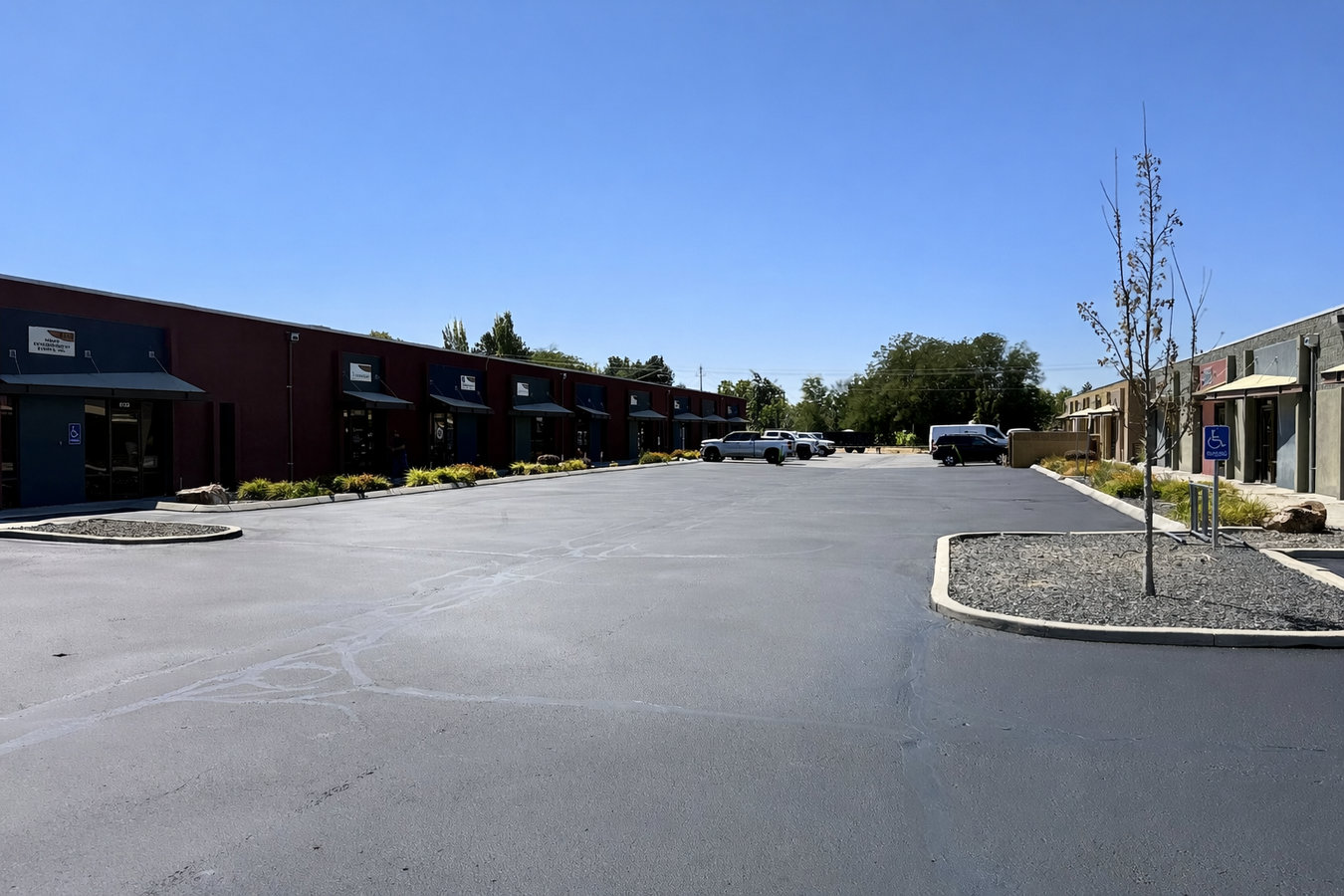
Gravel lots track mud inside and wash out in monsoon season. A concrete parking lot gives you a clean, permanent surface that holds up through Grand Junction winters and handles vehicle traffic for decades.
Concrete parking lot building in Grand Junction starts with excavation, a compacted gravel base, and a formed concrete slab with control joints cut at planned intervals - most residential-scale lots take three to seven days of active work, with at least seven more days of curing before vehicle traffic.
Most homeowners reach out after years of dealing with gravel that tracks inside, dust in the summer, mud in spring, and ruts that never fully recover. In Grand Junction, summer monsoon storms can wash a gravel lot toward the street in a single afternoon, and that problem does not get better on its own.
If your lot project connects to a new garage or carport, our concrete footings service can coordinate the structural foundation work in the same project sequence so you are not mobilizing a crew twice.
Sections of pavement that have pushed up, tilted, or broken apart after a winter are showing classic freeze-thaw damage combined with a weak base. Grand Junction's cold nights and warm days create exactly the conditions that destroy aging pavement from below. Patching individual cracks at this point is rarely the right answer - a full replacement is usually more cost-effective.
Standing water that does not drain within an hour or two after a storm means your surface has settled unevenly or was never graded correctly. In Grand Junction, summer monsoon storms can drop significant rain quickly, and pooling water accelerates cracking and undermines the base over time. The same puddles forming in the same spots every time it rains is your lot telling you something needs to change.
If your current parking area is unpaved and you are tired of dust in the summer, mud in the spring, and gravel tracking into your home or business, that is a clear case for a concrete surface. Gravel and dirt lots in Grand Junction also erode quickly during the July and August rain events, washing material into streets and drains. A concrete surface solves all of those problems at once.
Concrete approaching the end of its useful life shows it: rough and pitted surfaces, chipping edges, and cracks in a network pattern rather than isolated lines. If your lot was poured in the 1990s or earlier and you are doing repairs every year or two, the math usually favors replacement. A new lot will cost more upfront but will not need attention again for decades.
We handle every phase - site assessment, permit applications with the City of Grand Junction or Mesa County, excavation, base compaction, forming, the concrete pour, control joint cutting, and drainage grading. We coordinate the city or county inspection so you are not tracking it yourself. For parking areas that connect to a new structure, our concrete footings team can pour the structural footings in the same mobilization, keeping your project on one schedule and one invoice.
When a parking lot needs a paved connection to the street, our concrete driveway building service handles the approach and curb cut as part of the same project. Every lot we pour includes proper base depth for Grand Junction soil conditions, a freeze-thaw resistant concrete mix, control joints at planned intervals, and surface grading so water drains away from buildings and property lines.
For properties converting from gravel, dirt, or deteriorated asphalt to a permanent concrete surface.
For lots that are cracked, heaved, or past the point where patching makes economic sense.
For sites where standing water is a recurring problem and proper slope design is the solution.
For small business owners who need a lot that meets city and Mesa County grading and drainage requirements.
For properties adding a new lot and a paved connection to the street in one coordinated project.
For homeowners with RVs, trucks, or equipment that need a thicker slab designed for the extra load.
Grand Junction sits in a high desert valley where summer temperatures push past 100 degrees and winter nights drop well below freezing - sometimes within the same week in spring and fall. That kind of temperature swing puts enormous stress on concrete as it expands and contracts. A contractor who does not use a freeze-thaw resistant mix or time pours around the forecast is setting up a lot to fail within a few years. Grand Junction also sits on clay-heavy soils in many neighborhoods, particularly near the Colorado River. Clay swells when wet and shrinks when dry, and that movement cracks concrete from below if the base is not built with enough depth and compaction to account for it. The Colorado Geological Survey documents these expansive soil conditions across Mesa County, and any contractor who has worked here regularly will know which neighborhoods require extra base preparation.
Homeowners in Grand Junction and out toward Fruita face the same soil and climate challenges on parking lot projects. We build every lot with a base and mix designed for local conditions, not a one-size approach copied from a warmer or wetter climate.
We respond within 1 business day. Tell us the size of the area, what is currently there, and roughly how it drains. No need to have everything figured out - we work through the details during the site visit.
We come to your property, evaluate soil conditions, drainage, access for concrete trucks, and any obstacles. You get a written quote covering excavation, base material, concrete, joints, drainage grading, and cleanup - with no obligation.
Most parking lot projects in Grand Junction require a permit. We handle the application with the City or Mesa County - typical approval takes one to two weeks. Once the permit is in hand, you get a firm start date in writing.
We excavate to the required depth, compact gravel base in layers, form the edges, and pour. Control joints are cut before the concrete sets. Plan for at least seven days of curing before parking vehicles - this is not a step that can be rushed in Grand Junction's climate.
Free on-site estimate. We assess soil and drainage before quoting. No obligation.
(970) 312-8628Every parking lot project in Grand Junction that requires a permit gets handled by us from application to inspection. You do not track the permit office or schedule inspectors - we do. That means no stop-work orders, no fines, and no surprises after the job is done.
Grand Junction's combination of intense heat, low humidity, and freeze-thaw winters demands a specific concrete mix. We use freeze-thaw resistant concrete and time pours away from peak heat, following guidance from the Portland Cement Association on hot-weather concreting. A lot poured with the wrong mix or at the wrong time of day will start scaling and cracking within a few seasons.
Grand Junction and Mesa County both require that paved surfaces do not increase runoff onto neighboring properties. We design every lot's surface slope before pouring - not as an afterthought. Property owners in our area have seen standing water and permit problems from contractors who skip this step.
Mesa County's clay-heavy soils expand and contract with every wet-dry cycle. We excavate to the required depth and compact gravel base in layers - not once, but in multiple passes verified before the concrete is poured. This extra step is what separates a lot that lasts 30 years from one that starts cracking at 10.
Every one of those proof points comes from working in Grand Junction's specific soil and climate, not from applying a generic concrete formula to a local job. When you hire us, you get a crew that has seen what fails here and builds to avoid it.
Structural footings for any new garage, structure, or covered parking area built alongside your lot.
Learn moreConnect your new parking lot to the street with a properly graded concrete driveway approach.
Learn moreGrand Junction's best concrete pouring window is April through June. Call today to secure your start date before the season's most reliable weather closes.