Loading...
Serving Grand Junction, CO and surrounding areas. (970) 312-8628
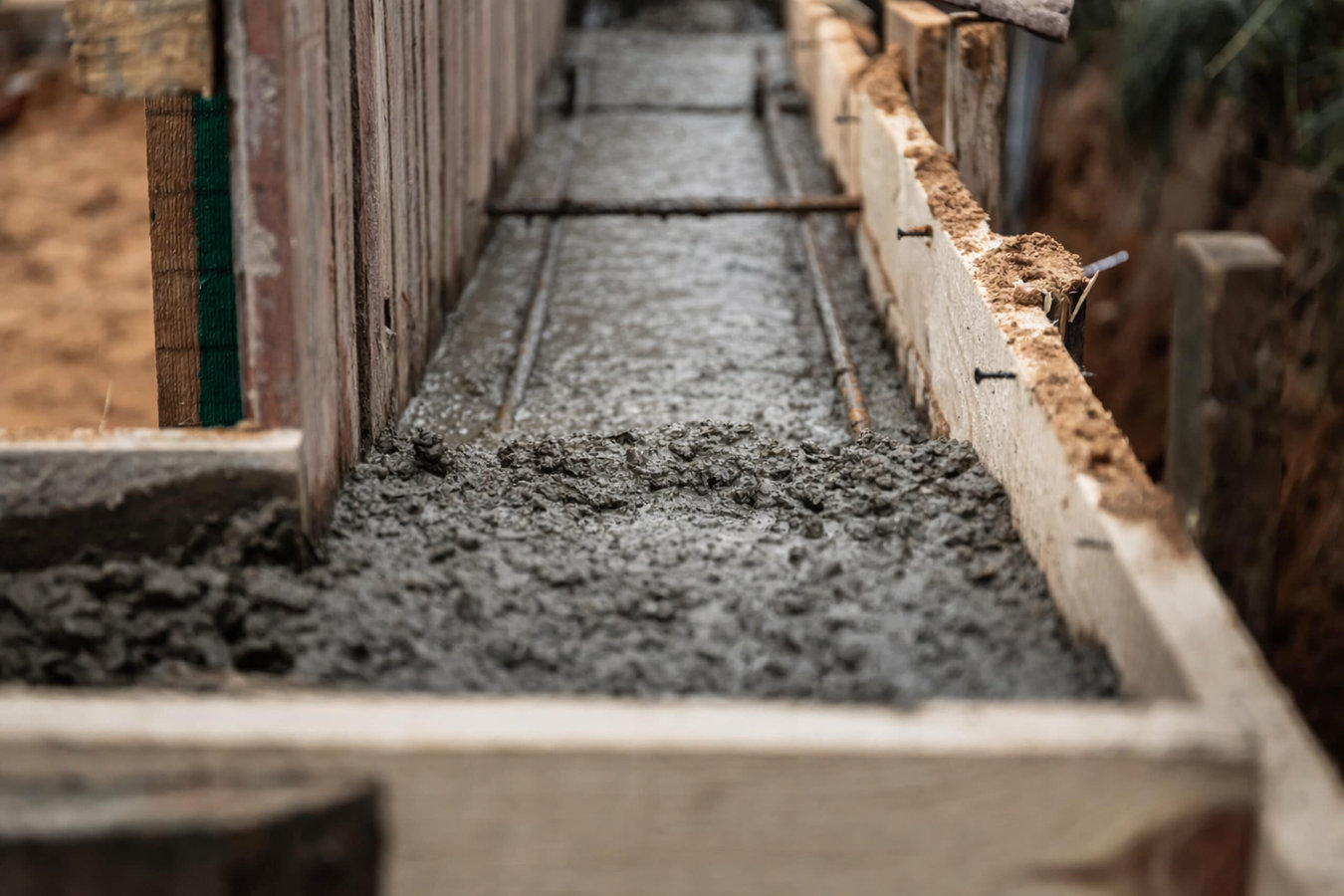
Your foundation carries everything above it. We install permitted foundations in Grand Junction that are dug to frost depth, built for shifting soils, and designed to handle the Western Slope's freeze-thaw winters and monsoon rains.
Foundation installation in Grand Junction means excavating below the local frost line, compacting the subgrade, forming and pouring reinforced concrete walls or footings, and building in drainage so moisture does not threaten the structure - most new residential foundations take three to seven days of active work plus one to two weeks for permit approval and roughly four weeks for the concrete to reach full strength before framing.
Grand Junction homeowners starting a new build or major addition are dealing with ground conditions that vary more than in most Colorado cities. Some parts of the Grand Valley have clay-heavy soil that swells and shrinks with seasonal moisture. Other areas - especially hillside lots near the mesas and the Redlands - can hit shallow bedrock during excavation. A contractor who has worked consistently in this area knows what to look for before the first shovel of dirt is moved.
For projects that call for a simpler slab-on-grade rather than a full excavated foundation, our slab foundation building service covers that scope. Larger commercial or multi-unit projects that require paved access and surface drainage around the building may also benefit from our concrete parking lot building capabilities.
The most straightforward sign you need foundation installation is that you are starting from scratch - a new home, a detached garage, or a significant addition that requires its own structural base. If there is no existing foundation where you need one, installation is the first step before any framing can begin.
When a foundation shifts or settles unevenly, the frame of your house moves with it - and doors and windows are often the first place you notice. If a door that used to close easily now drags, or a window will not latch, the foundation beneath it may have moved. In Grand Junction, where clay soils swell and shrink with seasonal moisture changes, this kind of movement is more common than in areas with more stable ground.
Wide cracks - especially diagonal ones, stair-stepped cracks along mortar joints, or cracks that are growing over time - can signal that a foundation is under stress. Grand Junction's freeze-thaw winters can accelerate this kind of cracking if a foundation was not installed deep enough or with adequate drainage.
If water collects against your home's foundation after a monsoon rain or spring snowmelt, that is a warning sign. Persistent moisture against a foundation wall can erode the concrete over time, and in Grand Junction's clay-heavy soils can cause the ground to swell and push against the structure. This problem gets more expensive the longer it is ignored.
We install new residential foundations for homes, garages, additions, and commercial builds across Grand Junction and the Western Slope. Every project includes permit handling through the City of Grand Junction Building Division or Mesa County Building Services, excavation to below the local frost depth, soil preparation, rebar placement, concrete forming and pouring, and drainage installation around the foundation perimeter. We work with slab-on-grade, crawl space, and full basement foundation types, recommending the right approach based on your lot and building plans.
For projects that only need a simple slab-on-grade with no excavated walls, our slab foundation building service is usually faster and more cost-effective. For projects with large paved surface areas surrounding the structure, we also handle concrete parking lot building and can coordinate that work with the foundation schedule.
Suits new homes and garages in Grand Junction where a poured concrete floor also serves as the structural base - simpler and faster than excavated foundations.
Best for homes where access to plumbing and mechanicals underneath the floor is important, or where the lot conditions make a full basement impractical.
For homeowners adding significant square footage below grade - requires deeper excavation and more concrete but provides the most usable space.
For any foundation type in Grand Junction's monsoon climate - gravel drainage planes and perforated pipe direct water away before it can build up against the walls.
Mesa County's frost depth is approximately 36 inches, which means a foundation that is not dug deep enough will be pushed around by repeated ground freezing every winter. That is a local requirement, not a national average, and contractors who work across multiple regions do not always account for it correctly. Grand Junction also receives most of its summer precipitation in fast, intense monsoon bursts during July through September. A foundation without proper drainage can be overwhelmed quickly by this kind of runoff - which is why drainage installation is a standard part of every project we do, not an optional add-on. The National Ready Mixed Concrete Association and the American Concrete Institute both publish standards our team follows on every foundation pour.
We serve the full Grand Junction metro area and the surrounding Western Slope, including Glenwood Springs and Rifle. Whether your project is in a mid-century neighborhood near downtown Grand Junction or on a newer lot in a subdivision on the north side of the city, we bring the same depth-of-knowledge about Western Slope soil and climate to every job.
We schedule a visit to your property - usually within a few business days of your first call or message. We assess the lot, soil conditions, and access for excavation equipment, then give you a written estimate covering excavation, materials, labor, and drainage. We respond to all inquiries within 1 business day.
We file for the required building permit with the City of Grand Junction Building Division or Mesa County Building Services, depending on your address. Permit approval typically takes one to two weeks. We handle the paperwork and communicate any questions from the building office directly - you do not need to get involved.
The crew excavates to the required frost depth - approximately 36 inches in Mesa County - then prepares the base, sets forms, and places rebar according to the approved plans. A city or county inspector visits before any concrete is poured to verify the work. We schedule this inspection and notify you when it is happening.
Concrete is delivered and poured into the prepared forms, finished, and left to cure. After reaching working strength - about one week - the crew backfills soil around the exterior walls and installs any drainage components. A final inspection closes out the permit. Your foundation is then ready for framing.
Every Grand Junction lot is different - we visit your property first so your estimate reflects your actual site, not a generic average. No obligation.
(970) 312-8628Mesa County's frost depth is approximately 36 inches - deeper than many Colorado Front Range cities. We always excavate to the correct local depth so winter freeze-thaw cycles do not push your foundation out of position. This is a detail that matters for decades, not just the first few seasons.
Foundation work in Grand Junction requires permits from either the City Building Division or Mesa County Building Services depending on your property address. We handle the permit application, communicate with inspectors, and schedule all required inspection visits on your behalf. When the work is done, you have documented proof it passed official review.
Grand Junction's July-September monsoon rains can deliver fast, heavy runoff in short bursts. We install drainage systems - graded soil, gravel, and perforated pipe - around every foundation we build as standard practice. Homes throughout the Grand Junction area have benefited from this approach through multiple monsoon seasons.
Parts of the Grand Junction area have clay-heavy soils that shift with moisture, while other lots on the mesa edges or hillside neighborhoods hit rock during excavation. Our team assesses your specific lot before quoting and designs the foundation approach around what is actually in the ground - not what is typical somewhere else.
Foundation installation is the one part of a construction project that cannot be corrected easily after the fact. Getting it right - with the correct depth, proper drainage, and permitted inspections - protects your investment for the life of the building.
A simpler, cost-effective alternative for projects where a slab-on-grade is the right fit - no excavated walls required, with the same permitted process.
Learn morePaved concrete surfaces for commercial and multi-unit projects that need vehicle access and surface drainage coordinated with the foundation work.
Learn morePermit season fills up fast - contact us now to lock in your start date before the best spring and fall slots are taken.