Loading...
Serving Grand Junction, CO and surrounding areas. (970) 312-8628
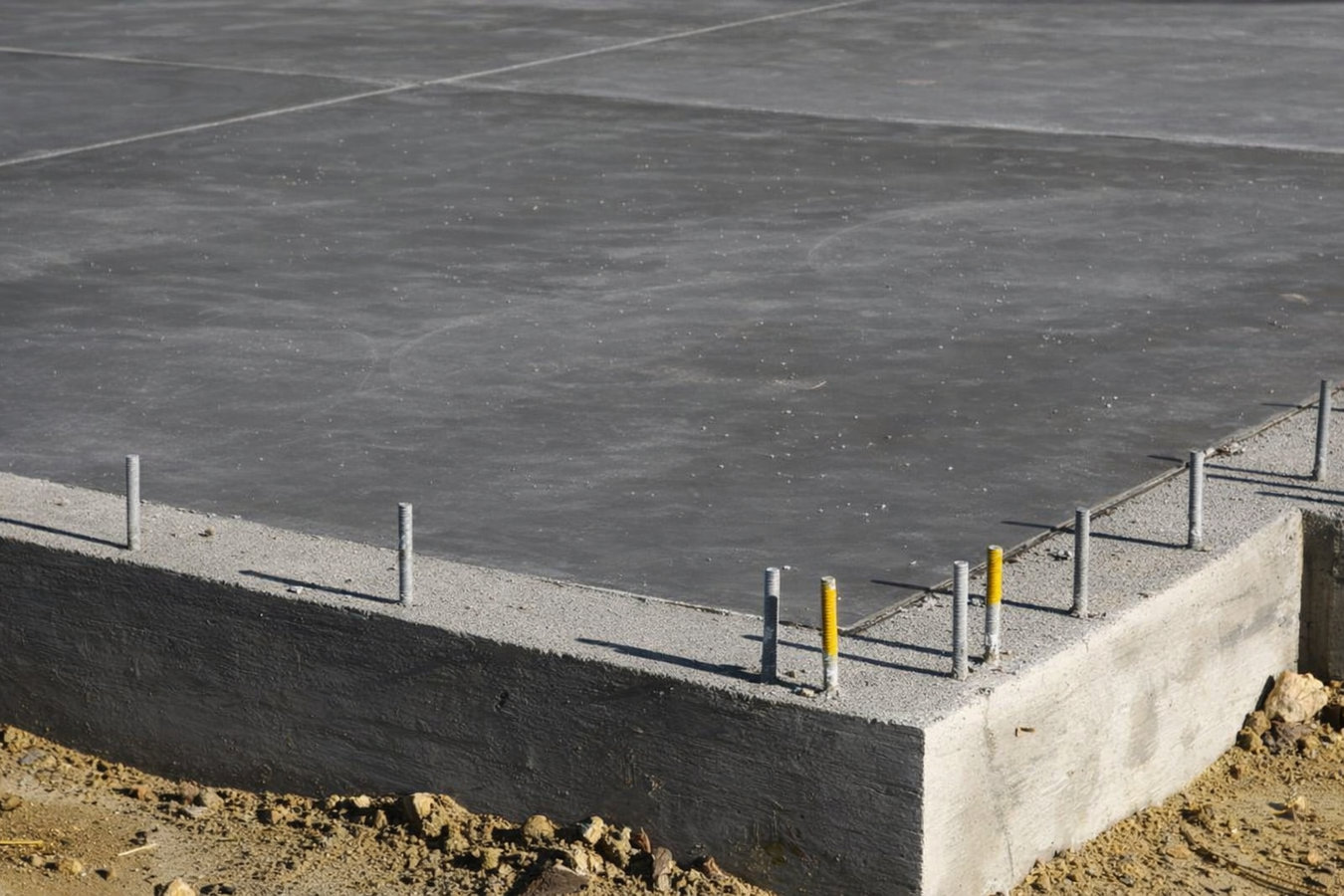
A new home, garage, or addition starts with the slab underneath. We build permitted slab foundations designed for Grand Junction's clay soils, high-desert climate, and inspection requirements.
Slab foundation building in Grand Junction means grading the site, compacting the soil, laying gravel and a moisture barrier, placing steel reinforcement, and pouring a thick concrete slab that becomes both the floor and structural base of your building - most residential slabs take one to two weeks from permit approval through the pour, then four weeks to reach full strength.
Many homeowners starting a new build, adding a detached garage, or putting up a workshop addition in Grand Junction underestimate how much the ground underneath matters. The Grand Valley's clay-heavy soils expand and contract with seasonal moisture changes, and that movement is the number one reason slabs crack or settle prematurely in this area. Getting the soil preparation right is more important than the concrete mix itself.
Once the slab is complete and inspected, framing can begin. If your project also involves deeper structural work below grade, our foundation installation service covers full excavated foundations. For projects that need structural support points before the slab, we also handle concrete footings.
If you are starting a new home, garage, workshop, or room addition in Grand Junction, a slab foundation is typically the first step before any framing can happen. Without a properly engineered slab underneath, no structure above it will stay stable or safe over time.
Small surface cracks in concrete are normal and usually cosmetic. But if you can see cracks wider than about 1/8 of an inch - or diagonal cracks running from corners of doors and windows - the slab may be moving or settling unevenly. In Grand Junction, this kind of movement often traces back to clay soils shifting with seasonal moisture changes.
When a slab shifts, the walls and door frames above it shift too. If doors or windows in your home have recently started sticking, dragging, or leaving gaps at the top or bottom, the foundation may be moving. This is especially worth paying attention to if the sticking started after a wet spring or a dry summer - both common in the Grand Valley.
After a storm, water should drain away from your home - not toward it. If you see water collecting against the foundation or seeping under the slab, the original drainage slope may be inadequate or the slab may have settled. Left unaddressed, this can cause long-term damage to both the slab and everything built on top of it.
We build residential slab foundations for new homes, detached garages, workshops, and room additions across Grand Junction and the surrounding Western Slope. Every project includes permit handling, site grading, soil compaction, gravel base, moisture barrier, rebar placement, and the pour itself. We also offer radon rough-in provisions as part of the original pour - a practical step for Mesa County homeowners given the area's known radon levels - at a fraction of what it costs to add later.
For projects that go beyond a simple slab - such as a home that needs an excavated basement or crawl space - our foundation installation service covers those more complex foundation types. If your project requires isolated support points or pier footings before the slab, our concrete footings work handles that piece of the job.
Suits homeowners building a new single-family residence who need a fully permitted, inspection-ready slab before framing begins.
Best for detached garage additions and standalone workshops where a thickened-edge slab provides a simple, cost-effective base.
For homeowners adding living space where the new section needs its own slab tied structurally to the existing home.
For Mesa County homeowners who want the option to add radon mitigation later without cutting into a finished slab.
Grand Junction sits at about 4,600 feet elevation, which means UV is stronger, humidity is lower, and fresh concrete loses moisture faster than at most elevations along the Front Range. That low humidity is one of the reasons contractors here use curing compounds or wet coverings as standard practice - not an add-on. At the same time, Grand Junction's clay soils are one of the primary causes of slab failure in this area. The Colorado Geological Survey documents how expansive soils in the Grand Valley require specific preparation steps that are not always necessary in other parts of Colorado. The City of Grand Junction Building Division also requires permit and inspection sign-off at the footing stage before concrete can be placed - an extra step that protects your investment. Learn more about city requirements at the Grand Junction Building Division.
We work throughout the Grand Junction area and the surrounding Western Slope, including Fruita and Montrose. Whether you are in a newer subdivision on the north side of town, in the Redlands area near Colorado National Monument, or on a rural lot further out in Mesa County, our team knows how local soil and climate conditions affect slab performance.
Call or message us and we will schedule a site visit - usually within a few business days. We look at the lot, assess slope and soil conditions, and give you a written estimate that breaks out site prep, materials, and labor separately. We respond within 1 business day of your first message.
We handle the permit application with the City of Grand Junction's Building Division on your behalf. Permit approval typically takes one to two weeks. Once approved, we confirm your start date. You do not need to call the city office - we manage the entire process.
The crew grades the site, compacts the soil, adds the gravel base and moisture barrier, and sets up the forms. Steel reinforcing bars are then positioned inside. Before concrete is poured, a city inspector visits to verify the prep meets code - we schedule this inspection and let you know when it happens.
Pour day typically takes four to eight hours for a residential slab. We apply curing protection suited to Grand Junction's dry climate immediately after finishing. After curing, we schedule the final inspection to close out the permit. At that point, your slab is ready for framing.
We visit your lot before quoting so the number you get reflects your actual soil, grade, and access - not a generic ballpark. No obligation.
(970) 312-8628Grand Junction's Grand Valley sits on some of the most expansive clay soils in Colorado, according to the Colorado Geological Survey. We build every slab with soil-specific compaction and drainage steps - not a one-size-fits-all approach - so the foundation stays level through wet springs and dry summers alike.
The City of Grand Junction requires a building permit and inspections for all new slab foundations. We handle the entire permit process - application, scheduling, and follow-through - so you never have to make a single call to the city Building Division. When the job is done, you have documented proof the work passed official review.
At over 4,600 feet elevation with low humidity and summer highs above 100 degrees, fresh concrete in Grand Junction loses moisture far faster than at most other Colorado locations. We use evaporation retarders and curing compounds on every pour - standard practice here, not an upcharge - so your slab cures strong rather than cracking at the surface.
We give you a detailed written estimate only after visiting your property - never a ballpark number over the phone. Because site conditions in the Grand Junction area vary significantly from one lot to the next, a proper estimate requires seeing your soil, grade, and truck access firsthand.
A slab foundation is the one part of your home that cannot be reached or replaced easily once framing starts. Our commitment is to get the preparation and the pour right the first time, using methods suited to Grand Junction's specific soil and climate conditions.
Full foundation installation for projects that require excavated basements, crawl spaces, or deeper structural systems beyond a simple slab.
Learn moreIsolated concrete footings and piers for projects that need structural support points under posts, columns, or additions before the main slab is poured.
Learn moreSpring and fall pour windows fill up fast - contact us now to lock in your project date before the best slots are gone.