Loading...
Serving Grand Junction, CO and surrounding areas. (970) 312-8628
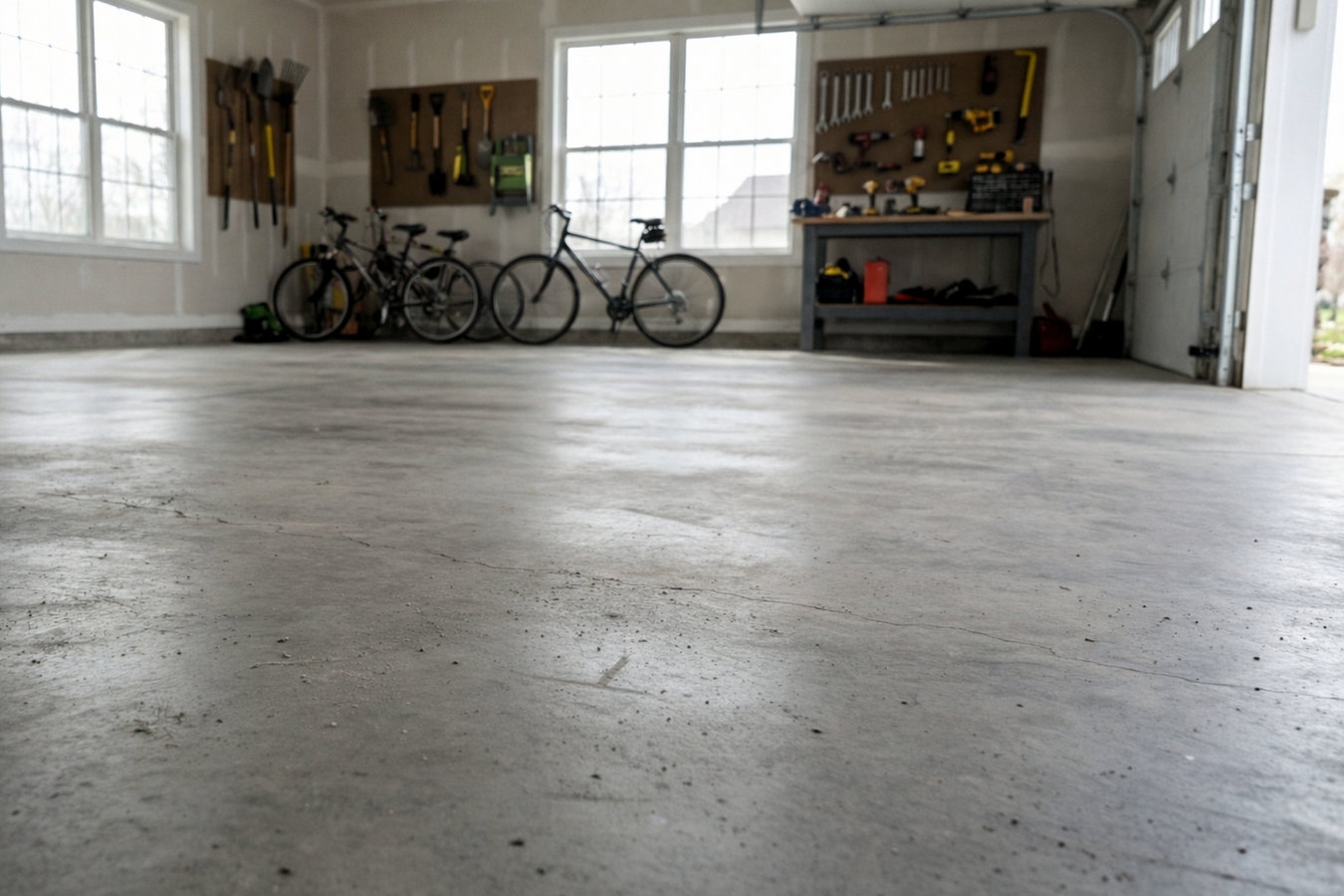
A cracked, crumbling garage floor is more than an eyesore. We pour properly prepared concrete garage floors built for Grand Junction soil conditions and Colorado winters.
garage floor concrete in Grand Junction means removing the old slab if there is one, grading and compacting the soil base, pouring fresh concrete in one session, and finishing the surface to the right texture - most residential jobs are poured in a single day, with the garage off-limits to vehicles for at least one week while the slab cures.
A large share of Grand Junction homes were built between the 1970s and 1990s, and many of those original garage slabs are now 30 to 50 years old. Slabs from that era were often poured thinner than current standards, and decades of clay-soil movement and freeze-thaw cycles take a cumulative toll. If you are seeing widespread cracking, uneven sections, or a surface that is dusting and flaking, you are likely past the point where patching will hold.
If you are updating other areas at the same time, our decorative concrete service can add color or texture to the finished floor, or to any adjacent slab on the property.
Small hairline cracks can be harmless, but if you can fit a pencil tip into a crack - or a crack has been growing over time - the slab is signaling something is wrong underneath. In Grand Junction, this is often a sign that clay-heavy soil has shifted beneath the slab. Patching the surface will not fix the underlying movement.
If part of your garage floor has risen or sunk relative to the rest, the ground beneath it has moved. You might notice it as a trip hazard near the door or as a visible slope when you look across the floor. This kind of unevenness tends to get worse over time, not better.
If the top layer is coming off in chips or leaves a fine powder when you sweep, the surface has deteriorated past the point where a coating will help. This kind of breakdown is accelerated by road salt and de-icing chemicals tracked in on tires - a real concern for Grand Junction homeowners in winter.
A properly graded garage floor should direct water toward the door, not collect it in puddles. Standing water after rain or snowmelt, or moisture coming up through the slab, means the drainage slope is wrong or the concrete is too porous to resist moisture. Left alone, this leads to faster deterioration.
We handle the full job - permit application, demolition of the old slab, hauling debris, grading and compacting the base, and the pour itself. We can finish the surface with a broom texture for grip, a smooth trowel finish for a cleaner look, or prepare the slab for an epoxy coating down the road. For customers who also want to update an adjacent concrete floor installation inside the home or a workshop space, we can coordinate both projects to reduce mobilization costs.
Every pour gets proper control joints - the intentional lines cut into the concrete that give it a controlled place to move with temperature changes. In Grand Junction, where temperatures can swing 50 degrees or more in a single day during shoulder seasons, those joints are not optional. They are what keeps a well-poured floor from cracking randomly across the middle of your garage.
For homeowners whose floor is cracked, heaving, or past the point of repair.
For new construction or garages that never had a proper slab.
Complete removal of the old slab before the new pour begins.
The practical choice for grip - especially in a working garage used year-round.
For homeowners who want a cleaner look or plan to add an epoxy coating later.
Protects against oil, moisture, and road chemicals tracked in on tires during winter.
Grand Junction sits in a high desert basin where summer highs regularly exceed 100 degrees and winter nights drop well below freezing. That temperature range - sometimes 50 degrees of swing in a single day during spring and fall - causes concrete to expand and contract more than in most parts of Colorado. Combined with the clay-heavy soils throughout much of the Grand Valley that swell when wet and shrink in the summer heat, you have conditions that demand proper base preparation and the right mix. A floor poured without that attention will show problems within a few years. According to the American Concrete Institute, proper subgrade compaction and control joint placement are among the most critical factors in slab longevity - and they matter even more in climates with extreme temperature variation.
We work across the Grand Junction metro area and surrounding communities. Homeowners in Fruita and Delta deal with the same soil conditions and temperature extremes - and the same need for a contractor who knows what those conditions require before the first shovel goes in.
We respond within 1 business day. Tell us the size of your garage and whether there is an existing slab to remove - that is all we need to schedule an on-site visit. No commitment required.
We come out to look at the existing floor, check the soil conditions underneath, and give you a written quote covering demolition, base prep, the pour, finish, and cleanup. Pricing is itemized so there are no surprises.
We handle the City of Grand Junction permit application before any work starts. Permit approval typically takes a few business days to two weeks. Once it is in hand, you get a firm start date.
The old slab comes out, the base is graded and compacted, and the pour happens in one day. A city inspector signs off on the work. The floor is ready for vehicles in about a week.
We respond within 1 business day and come out to look at the job before giving you a price. No obligation - just a written estimate and a clear answer on what your project will cost. Someone from our office will call to schedule after you submit.
(970) 312-8628We hold a current Colorado contractor license - verifiable through the Colorado Department of Regulatory Agencies - and carry full liability and workers compensation coverage. Your property and your investment are protected on every job.
The City of Grand Junction requires a permit for garage floor work as part of a structure. We pull it, coordinate the inspection, and make sure your new floor is documented and above board. This matters when you sell your home.
Grand Junction's clay-heavy soils expand when wet and shrink when dry. We excavate, compact, and add gravel drainage before we pour - not just on top of whatever is there. That preparation is why floors we build do not heave or crack within a few years.
We work across Mesa County and into the surrounding communities - from Fruita and Delta to Montrose and beyond. Local experience means we already know what the soil and climate conditions in your neighborhood demand.
We do not cut corners on the base work, and we do not skip permits. Those two things are what separate a floor that lasts 30 years from one that needs patching in five.
Add color, texture, or a stamped pattern to your garage floor or other concrete surfaces.
Learn moreInterior concrete floor solutions for living spaces, workshops, and commercial areas.
Learn moreSpring booking slots fill fast - contact us now to lock in your start date before the best pouring weather is gone.